
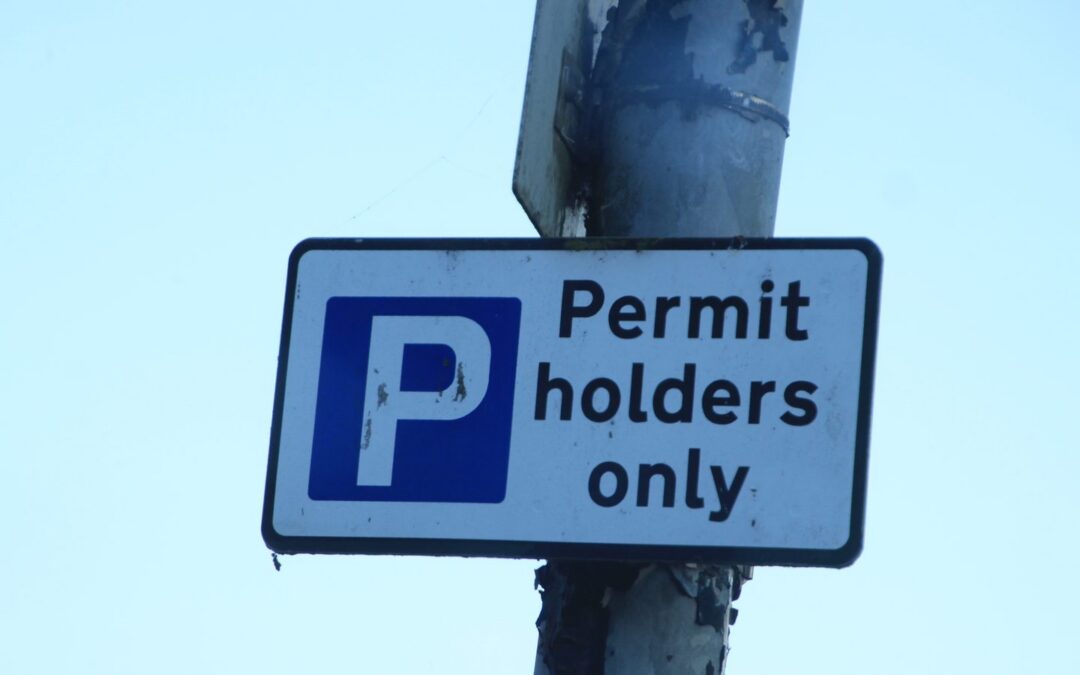
Somewhere in your organisation there is probably a box of permits. A drawer of laminated cards, a spreadsheet of who has which one, and an inbox full of replacements, renewals and “my car is in the garage, can I use my partner’s”. Multiply that across a council’s residents, a hospital’s shift workers or a university’s students and contractors, and permit administration becomes a job in itself.
It does not have to be. The tools to run permits entirely digitally have matured, and the organisations that have made the switch rarely want to go back.
What a paper permit costs you
The obvious cost is administration: printing, posting, chasing, replacing. The less obvious cost is what a paper permit cannot do.
It cannot tell you whether the vehicle displaying it is the one it was issued to. It cannot be cancelled remotely when a member of staff leaves. It cannot be checked by a camera. And it generates no data about how your car parks are actually used, so capacity decisions rest on guesswork.
Fraud sits quietly underneath all of this. Copied permits, permits sold on, resident permits used by commuters and staff permits shared between shifts are common enough that most parking managers have a story. A paper scheme makes each easy and almost impossible to detect.
The digital permit, explained
A digital permit is a record, not a thing. It links a vehicle registration to an entitlement: a resident zone, a staff car park, a visitor allowance, a contractor window. The entitlement carries rules on dates, times, locations and how many vehicles or changes are allowed, and it is enforced by checking the registration rather than looking for a card on a dashboard.
That single change unlocks everything else.
- Self-service. Applicants apply, upload evidence and pay online, from any device, at any time. Renewals can be automatic. Change-of-vehicle requests take seconds rather than a fortnight.
- DVLA-linked checks. Vehicle details can be validated against DVLA data at application, confirming the registration exists and matches the declared make and model. That removes a whole category of typing errors and deliberate misdirection.
- Instant whitelisting. Once approved, the registration is live across every camera and enforcement device on the estate. When someone leaves, it is revoked just as quickly.
- Visitor flexibility. Residents or departments receive a virtual allowance they can allocate to visitors themselves, without calling your team.
For the applicant, the experience is closer to renewing car tax than filling in a form. For your team, the queue of routine tasks largely disappears.
Enforcement that happens automatically
The permit is only half of the picture. Enforcement is where digital schemes earn their keep.
In a barrier or ANPR Freeflow car park, a camera reads the plate and the system checks the permit database before the barrier lifts or the stay is logged. Anyone without a valid entitlement is refused entry or handled through the normal payment and charge notice process. On-street, civil enforcement officers check a registration on a handheld and see live permit status, rather than squinting at a faded card through a windscreen.
Because every check is recorded, patterns emerge. A staff permit used at three sites simultaneously, a resident permit seen every weekday at commuter time, a contractor window that is somehow always open. A paper scheme could never surface these.
Keeping it fair and accessible
Digital does not have to mean digital-only. A good scheme keeps a route for people who cannot apply online, whether an assisted application by phone, a counter service or a trusted third party applying on someone’s behalf. Evidence requirements should be proportionate, and Blue Badge holders and carers need clear, simple provision.
It is also worth being open about data. Tell applicants what you hold, why and for how long. A scheme that is transparent about ANPR and data handling gets far fewer complaints than one that leaves people to guess.
How Sagoss approaches permits
Our permit management product, Permisso, handles the application, evidence, payment and whitelisting workflow, and sits inside the wider Blink platform, known on our sector pages as Blink Enterprise. The permit database, ANPR cameras, kiosks, tariffs and enforcement back office all read from the same record. No nightly export, no reconciliation, no gap in which a cancelled permit still works.
We have deployed this model for councils managing resident zones, hospitals balancing staff and visitor demand, and universities absorbing a new intake every autumn.
If you are still managing a box of permits, we would be glad to show you the alternative. Book a Blink demo or contact the Sagoss team.