
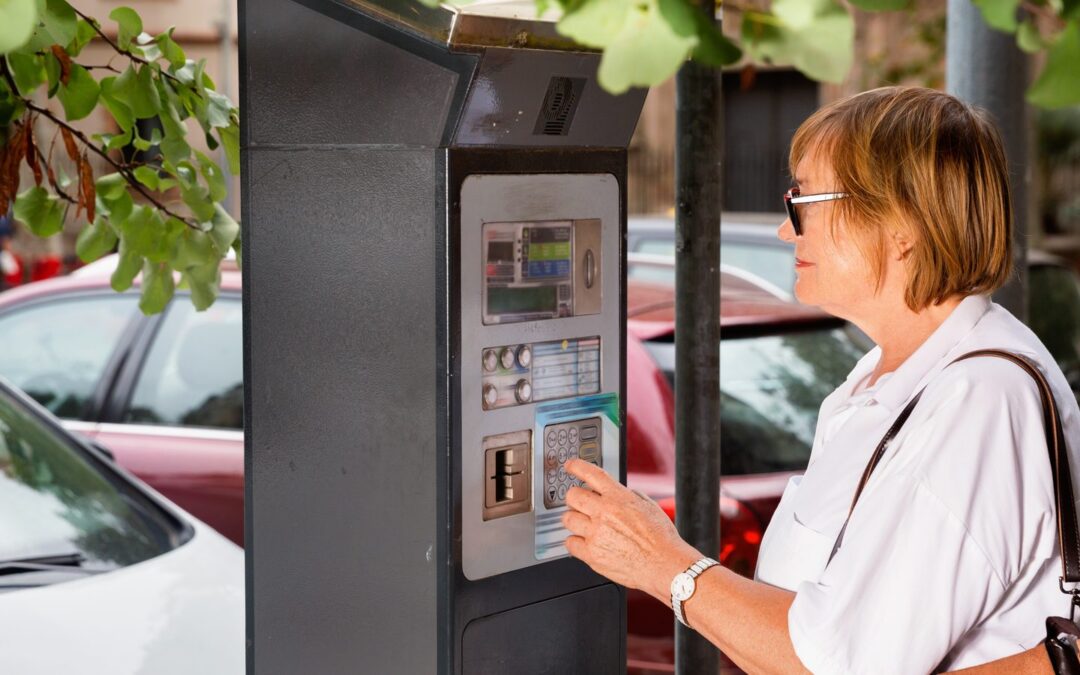
Ask a room of parking managers whether they want to go cashless and most hands go up. Fewer stay up when you ask who has had a complaint from a resident without a smartphone, or a councillor forwarding a letter about a “phone-only” car park. Cash handling is expensive, slow and a security headache, but removing every non-digital option removes some of your customers along with it.
This is not a binary choice. A well-designed payment mix can cut cash costs sharply while still giving every driver a way to pay that works for them. Here is how we think about it.
Start with who actually parks with you
A university car park, a hospital visitor car park and a rural market-town car park have very different users. Before deciding which channels to keep, look at what your data tells you: short versus long stays, the age profile of the area, repeat versus one-off visitors, and how many payments currently arrive as coins.
Two groups deserve particular attention. A minority of UK adults still rely on cash for everyday spending, and some older adults do not use a smartphone for payments. Neither group is small enough to ignore, and for a local authority both are constituents as much as customers. Hospital sites also see visitors who are stressed, unfamiliar with the area and in no mood to download anything.
The four channels that cover nearly everyone
An inclusive mix rarely needs more than four routes to payment, provided each is done properly.
- Kiosk. Still the anchor for many sites. A modern kiosk should take contactless card and phone, print or email a receipt, and be readable at wheelchair height and in bright sunlight. Cash can be kept on selected machines rather than every one, which is where most of the saving comes from.
- App. Convenient for regulars, and increasingly interoperable as the National Parking Platform rolls out and more councils accept payment through any participating app. Drivers should never be forced into a single branded app to park.
- Web pay. A QR code or short URL that opens a mobile-friendly page with no download and no account. This quietly solves most “I don’t want another app” objections and works well on freeflow ANPR sites where drivers pay on exit or later.
- Phone. Automated voice payment, or a staffed line for those who need it. It is low volume but disproportionately valued by the people who use it.
Underpinning these, a cashless payment layer such as Mobon means each channel writes to the same transaction record, so enforcement, refunds and reporting see one truth rather than four.
Accessibility is a design brief, not a compliance box
The Equality Act places a duty on public bodies to make reasonable adjustments, and the practical test is simple: can a driver with a visual impairment, limited mobility or no bank card pay for parking without help? That means audible prompts and high-contrast screens on kiosks, a payment page that works with screen readers, Blue Badge workflows that do not depend on an app, and a route for someone who arrives with only coins.
There is also the question of grace. ANPR-based freeflow parking allows a pay-later window, so a driver who could not find a working payment method is not immediately penalised. Used carefully, that single setting removes a large share of appeals.
Communicate before, not after
Most complaints about cashless parking are really complaints about surprise. Entrance signage should say how to pay before the driver commits. Tariff boards should carry the web-pay URL and phone number in a size readable from a car window. Council websites should list, car park by car park, which payment options are available. If you are removing cash from a site, a notice period with clear alternatives goes a long way.
What good looks like
A cashless-first estate does not need to be a cashless-only estate. Operators that get this right keep cash on a few well-placed machines, put web pay everywhere, join the interoperable app ecosystem rather than locking drivers into one provider, and watch the channel data monthly. The result is lower collection cost, fewer failed payments, better compliance and fewer letters to the chief executive.
Blink brings every channel into one view, so you can see payment mix by site, spot where drivers struggle and change tariffs from any device. If you are reviewing your payment strategy, we would be glad to share how operators across 3,000+ locations have approached it. Book a Blink demo or talk to the Sagoss team.